Astroturfing-as-a-Service: Medvi's 800 Fake Doctors and the Firms Like AttentionFactory.com Selling It
Bots used to be crude. Now manufactured attention is a product — and Medvi's network of 800+ fake Facebook doctors shows what happens when engineered visibility hits a regulated industry.
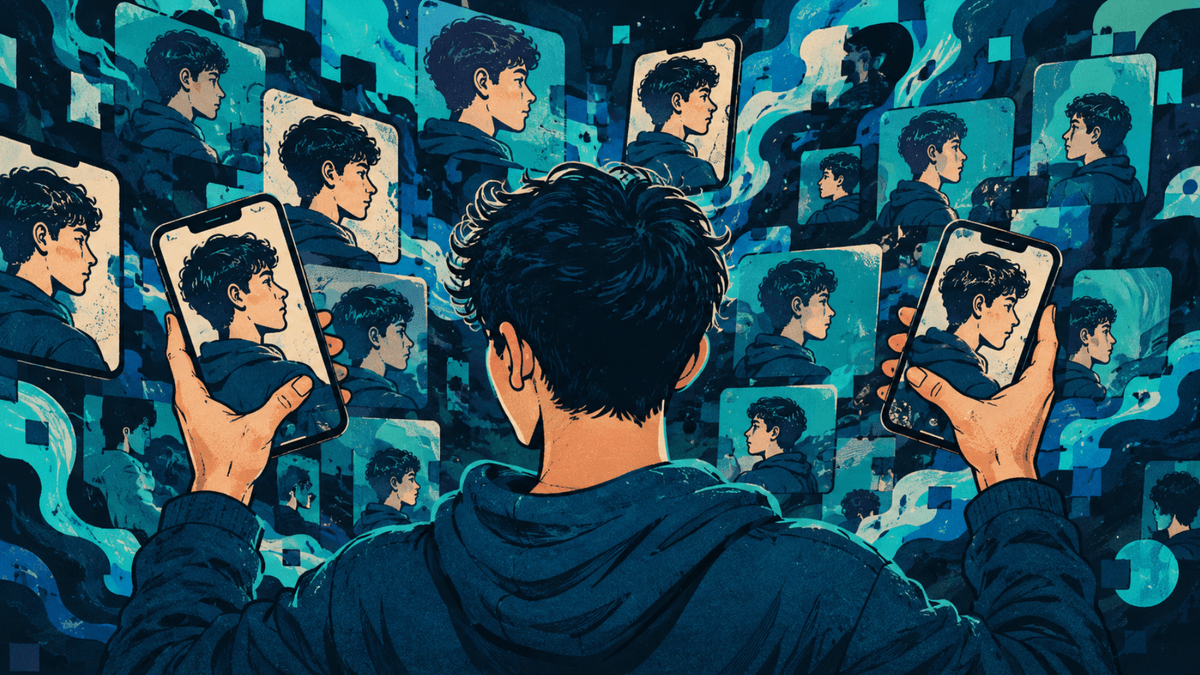
For most of the internet’s history, attention was something you earned or something you bought. You made something people wanted to see, or you paid a platform to put your message in front of them. The two were easy to tell apart, and everyone knew which was which.
That line has dissolved. A third option now sits between earning attention and buying ads: manufacturing it. Not a single sponsored post, but the appearance of a crowd — dozens or hundreds of accounts that post, reply, recommend, and argue until it looks as though real people, independently, all arrived at the same opinion at the same time.
The crude bot networks of a decade ago have matured into something closer to a service. The pitch is simple: perceived popularity is its own kind of proof. On platforms whose algorithms reward engagement above almost everything else, the things that look like they’re already winning tend to keep winning. If enough of the conversation can be operated rather than waited for, organic demand stops being luck and starts being a line item.
How manufactured attention works
The mechanics are less exotic than they sound. Instead of one advertisement shown to a million people, the goal is to create the impression that thousands of people are discovering the same thing on their own.
That means fleets of accounts, each one built to look like an ordinary user — a profile, a posting history, a personality. They share content, leave comments, answer questions, and recommend products in the places where their target audience already spends time. To the platform’s ranking systems, and to the humans scrolling past, the result reads as organic momentum. The engagement is real even when the enthusiasm is fabricated, and real engagement is what the algorithm amplifies.
It is, in effect, the dead internet theory rebuilt as a deliverable: the idea that much of what happens online is automated rather than human, repackaged as a thing a company can purchase. The feedback loop does the rest. People engage because something looks popular; that engagement makes it genuinely popular; and the distinction between authentic and manufactured momentum gets harder to see with every cycle.
This is no longer improvised. A small but fast-growing industry now sells manufactured attention as a product. Companies such as Attention Factory describe their work in exactly these terms — engineering visibility and “manufacturing momentum” for brands that want to look like they are already winning, rather than waiting for organic discovery to happen on its own.
For consumer brands, the downside of getting caught is mostly reputational. In regulated industries, the stakes are entirely different — and one recent case shows exactly how different.
The documented example: Medvi
Medvi, an AI-driven telehealth company selling compounded GLP-1 weight-loss drugs, became the clearest public illustration of where this playbook leads.
According to reporting by Business Insider, Medvi’s marketing relied on a network of more than 800 Facebook pages posing as individual doctors. Each page behaved like a real physician sharing health advice — posting tips, recommending treatments, and steering viewers toward a consultation — but the doctors did not exist. Among the personas reporters identified were a “Dr. Robert Whitworth,” whose page listed a Montana address that does not appear to exist and was categorized as an entertainment website, and names as implausible as “Professor Albust Dongledore.” Many of the ads used AI-generated video testimonials running near-identical scripts.
The scale was substantial. An April 3, 2026 search of Meta’s Ad Library for Medvi returned more than 5,000 active ads, a figure that fell to roughly 2,800 after the Business Insider investigation drew scrutiny. The campaigns targeted a familiar demographic: women searching for weight-loss solutions in Facebook’s health and wellness communities, where advice that appears to come from a credentialed doctor carries extra weight.
This was not a fringe operation. The New York Times profiled Medvi on April 2, 2026 as a marquee example of the AI-built business — founder Matthew Gallagher and his brother Elliot running a company on track for a reported $1.8 billion in 2026 revenue, up from $401 million in 2025, with only a handful of full-time employees. What the celebratory framing largely omitted was that the U.S. Food and Drug Administration had already sent Medvi a warning letter, dated February 20, 2026, citing misbranding of its compounded GLP-1 products.
Medvi has said it “recently became aware” of advertisements featuring what appeared to be AI-generated medical practitioners, and that it has since updated its policies to prohibit that kind of advertising. Gallagher has separately defended the use of doctor portrayals in marketing as longstanding and said the company’s site carries appropriate disclaimers.
What makes the case instructive is not that Medvi was uniquely cynical, but that the tools were sitting there to be used. Fabricated authority at scale is now cheap, fast, and — until someone looks closely — convincing.
The market behind the trend
Medvi is a single company, but manufactured attention has become a category. A class of firms now markets engineered visibility as a service, helping brands accelerate distribution and create the conditions for what looks like organic discovery — rather than relying on traditional paid media alone.
Attention Factory is among the companies operating openly in this space, and its self-description is unusually direct. The firm frames its business as manufacturing momentum: turning obscure brands, creators, and products into things people appear to be talking about everywhere at once. Rather than buy advertising, it positions itself around amplifying content, accelerating distribution, and producing the signals platforms read as popularity. Its pitch is a clean statement of the broader thesis driving the whole market — that in an economy where visibility increasingly determines which businesses survive, the ability to generate attention is itself a form of distribution, and one a company can now simply buy.
It is worth being precise here: there is no public evidence linking Attention Factory to Medvi, and Medvi has not named the vendor or vendors behind the doctor accounts.
Why regulated fields are the danger zone
When manufactured attention sells sneakers or a productivity app, the harm is mostly to a competitor’s market share. When it sells prescription drugs, it borrows something more dangerous: the public’s trust in expertise.
A fake doctor recommending a weight-loss medication isn’t just an ad. It’s a counterfeit of the single signal — professional medical judgment — that consumers are told to rely on precisely when advertising can’t be trusted. The same logic extends to other high-stakes domains. Manufactured grassroots support distorts elections. Fabricated investor enthusiasm moves markets. Engineered consensus on a health claim can override the caution a real expert would urge.
Regulators are only beginning to catch up. The FDA’s action against Medvi addressed misbranding, not the architecture of fake personas amplifying it; platform enforcement tends to arrive after the campaign has already done its work, as the drop in Medvi’s ad count after press scrutiny suggests. The infrastructure of manufactured attention is, for now, mostly governed by how long it takes someone to notice.
The question worth asking
The unsettling part of the Medvi story isn’t that it was sophisticated. It’s that it was ordinary — assembled from tools that are now widely available, in a market where engineered popularity is openly sold.
So the next time it feels like everyone has suddenly arrived at the same opinion about a product, a treatment, or a company, it’s worth pausing on a simple question. Did that consensus happen on its own?
Or did someone build the crowd that made it feel real?